DustVue / DustVue 10
DustVue 10 ソーラーモジュール汚れセンサー
実質的にセンサーメンテナンスが不要な正確なPV汚れ測定
IEC 61724‑1推奨の汚れ率測定方法を使用し、コストのかかる手作業による清掃や特定の環境校正を排除
気象 アプリケーション 水 アプリケーション エネルギー アプリケーション ガスフラックスと乱流 アプリケーション インフラ アプリケーション 土壌 アプリケーション

概要

DustVue™10は、IEC 61724-1で定義された推奨方法に従い、清浄なPV基準セルと自然に汚れたPV基準セルを並置して、太陽光発電(PV)の汚れによる損失を直接測定します。従来の測定方法では、精度を維持するために頻繁に手動で洗浄する必要がありましたが、DustVue 10は清浄な基準セルを自動的に保護し、信頼性の高い比較に適した環境条件になった場合にのみ基準セルを露出させます。

その結果、定期的な手作業による清掃や水噴霧による基準システムなど、メンテナンスに通常必要となる労力やコストを負担することなく、オペレータが継続的に信頼できる計測が可能になります。標準Modbus通信プロトコルにより、本機器は既存のプラント監視システムに直接統合できます。

続きを読む

利点と特徴

  • 真のIEC推奨測定方法 – PV基準セルを並べて、モジュールの汚れ挙動を推定するのではなく、実際の汚れ挙動を測定します。
  • 自動クリーンリファレンス保護 - モーター駆動式カバーにより汚染を防ぎ、毎日の手動洗浄なしで測定の安定性を維持します。
  • O&Mメンテナンスの負担軽減 - 毎日の清掃、校正ルーチン、水噴霧参照システムなしで測定精度を維持
  • 洗浄決定の信頼性 - 洗浄スケジュールとパフォーマンス評価をサポートする信頼性の高い損失データを提供します
  • 1台の機器で両面監視 - 重複したセンサーを設置することなく、前面と背面の汚れを同時に測定
  • 長期の現場展開に対応 – 屋外での継続的な運用をサポートする産業用機械設計と環境制御
  • オープンSCADA統合 - 標準Modbus RS-485出力により、ほぼすべてのデータロガー、SCADA、または監視プラットフォームと統合できます。

イメージ
<b>Click through the images to learn more about the DustVue 10.</b>
Click through the images to learn more about the DustVue 10.
<b>Click through the images to learn more about the DustVue 10.</b>
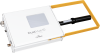
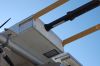
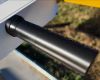
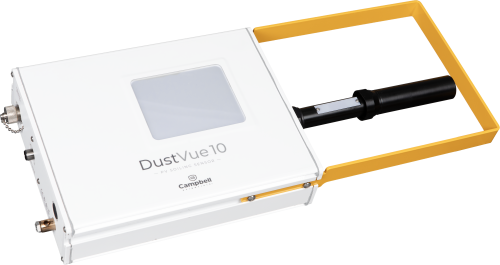
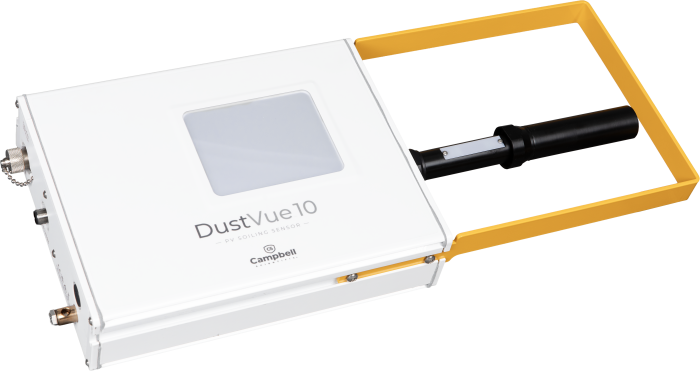
When closed, the DustVue 10's automated shutter prevents contaminates like water, dust, and pollen from fouling the clean reference sensor.
Your soiling ratio number is only as good as the clean reference behind it. The DustVue 10 protects that reference with an automated sliding shutter that opens briefly to measure and seals closed the rest of the time. The control logic can override the scheduled opening when conditions point to higher contamination risk (e.g., rain or rapidly changing cloud cover), helping to keep the baseline stable over long deployments.
IEC 61724-1 points to a clean-versus-soiled comparison as the preferred way to quantify soiling loss because it mirrors the physics of PV production. The DustVue 10 is built around that method: two matched references, one protected to stay clean and one allowed to soil naturally, so the measurement stays representative and defensible without constant manual cleaning.
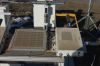
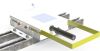
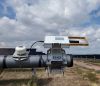
Mount the DustVue 10 where the performance happens: directly on the tracker torque tube, in plane-of-array, moving with the modules. Because it sees the same tilt, wind, and airborne debris as the production panels, the soiled reference experiences a representative deposition rate. When the application calls for it, the same instrument can be installed on solar resource assessment (SRA) or met structures.
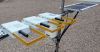
Representative soiling starts with a representative surface. The soiled reference uses PV-module glass selected to mimic how standard panels collect dust, so the reported loss is tied to real module behavior, not a convenient surrogate. The photo tells the story: the soiled reference matches the naturally soiled test panel, while the protected clean reference remains pristine for a true side-by-side comparison.
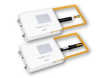
Bifacial plants need front and rear soiling—at the same time, at the same location. The DustVue 10 integrates upward- and downward-facing clean and soiled references in one unit, so you don’t have to buy, mount, align, and reconcile two separate sensors. That’s simpler installation and a cleaner measurement chain.
In controlled evaluations, panel-to-panel comparison is the benchmark because it directly measures what soiling does to PV output. The DustVue 10 delivers that comparison continuously while reducing the routine maintenance burden that many optical and manually cleaned approaches depend on to stay accurate, especially when dust, pollen, or debris characteristics change.
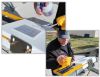
Treat the soiled reference like your modules: let it soil naturally and clean it when the array gets cleaned. The protected clean reference typically only needs periodic inspection (often once or twice per year), because it is sealed between brief measurements. Less maintenance means fewer missed cleanings, fewer data gaps, and less risk that the reference drifts simply because it wasn’t serviced on time.
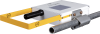
The stay-clean shutter isn’t a cosmetic cover; it’s a measurement safeguard. By sealing the clean reference between measurements, it blocks buildup from water, frost, pollen, and windblown dust that would otherwise bias the baseline. The heater inside the assembly helps prevent freezing in cold conditions so the shutter can keep operating.
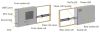
Commissioning shouldn’t require a programmer. The DustVue 10 uses an onboard, browser-based interface for fast setup, checks, and adjustments using a simple USB‑C connection. It then drops into plant monitoring via Modbus RS‑485 so virtually any SCADA or data logger can pull measurements and status.
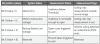
The DustVue 10 doesn’t just output a number and hope for the best. Status registers (System Status, Measurement Status, and Measurement Flags) provide actionable diagnostics like motor/voltage issues, conditions preventing a valid reading, and flags that warn when a measurement may be compromised. That’s the difference between “data” and “data you can trust.”
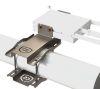
Need a fast, flexible install? The universal mounting hardware supports common field structures such as Unistrut and crossarms, making it easy to place the sensor where it will be representative. Proper placement is what makes the soiling ratio number meaningful.
Tracker geometries vary, but the measurement requirement does not: stay in plane-of-array and maintain clearance for the downward-facing window. Multiple torque-tube mounting options help you fit common tracker hardware while keeping the correct alignment, which reduces install friction and helps ensure the rear-side measurement is usable from day one.
Utility-scale sites are not gentle; heat, cold, wind, blowing dust, and precipitation are normal operating conditions. The DustVue 10 is designed for that reality, combining sealed protection for the clean reference with field-ready construction and integration. The result is a soiling measurement approach that can stay deployed, not one that constantly asks for attention.

詳細

汚れによる損失を正確に定量化するには、自然に汚れたPV表面を、同一の清浄な基準と比較する必要があります。このため、IEC 61724-1では、PV基準装置を同一場所に設置することが推奨される測定方法とされています。課題は測定方法ではなく、清浄な基準を維持することです。

従来のアプローチでは、頻繁な手作業による洗浄や自動洗浄システムによって清浄な基準面を維持しようと試みてきました。しかし、どちらの方法も運用上の課題を伴います。定期的な現場訪問、遠隔地への水供給、ノズルのメンテナンス、そして各サイクル後に基準面が本当に清浄な状態に戻っているかどうかの不確実性などです。

DustVue 10は、汚染を繰り返し除去するのではなく、汚染を予防します。自動スライド式保護カバーがクリーンなリファレンスセルを汚染から保護し、安定した照度条件下でのみ短時間だけ露出させることで、一貫した比較基準を維持します。

清浄な基準状態が自動的に維持されるため、オペレーターは定期的に検証された機器ではなく、測定値を意思決定の判断材料として利用できます。センサーがまだ清浄かどうかを気にする代わりに、チームは洗浄スケジュール、洗浄システム、校正サイクルを管理することなく、データが示す内容に集中できます。

DustVue 10はアレイ面内に設置されるため、汚れた基準モジュールは実稼働モジュールと同じ環境にさらされます。両面構成により前面と背面の汚れを同時に監視できるため、上向きと下向きの別々の機器を設置する必要はありません。環境シーリング、内蔵ヒーター、そして機械信頼性試験により、過酷な気候下でも屋外での連続運用をサポートします。

DustVue 10は標準のModbus RS-485経由で測定値を出力するため、Modbusレジスタの読み取りが可能なほぼすべてのSCADAプラットフォーム、データロガー、またはパフォーマンス監視システムに接続できます。これにより、通信インフラストラクチャを再設計したり、特定のベンダーのエコシステムに標準化したりすることなく、正確な汚れ測定を導入できます。

汚染測定の目的は、単に数値を記録することではなく、不確実性を排除することです。DustVue 10は、信頼性の高い測定アプローチを維持しながら、従来必要だった継続的な維持管理の手間を省き、プラントの寿命全体にわたって、信頼性の高い運用および財務上の意思決定をサポートします。

仕様

動作温度範囲 -40° ~ +70°C
汚染率の不確実性 ±1%
入力電圧範囲 12 to 32 Vdc
消費電力 - アイドル時
  • 5°C以上では1W未満
  • 5°C以下で約13 W (ヒーター作動時)
消費電力 - アクティブ
  • 0.5 A @ 24 V (5℃以上の測定時)
  • ~1.0 A @ 24 V (測定時、5℃未満、ヒーター作動時)
消費電力 - ヒーター全開時 ~24 W
注記 小型ヒーターがカバーガスケットの凍結を防ぎ、測定に支障をきたしたりガスケットを損傷したりするのを防ぎます。ヒーターは、周囲温度が5℃以下、または湿度と温度条件により霜が発生する可能性がある場合に作動します
通信 RS-485 経由の Modbus RTU
IP等級 IP65
配送寸法 27.94 x 58.42 x 11.43 cm (11 x 23 x 4.5 in.)
発送重量 3.54 kg (7.8 lb)


下記の製品は置き換えられました

Privacy Policy Update

We've updated our privacy policy.  詳細はこちら

Cookie Consent

Update your cookie preferences.  クッキーの設定を更新する